Video Tutorials
MCHP Blockset Video Resources
Video tutorials and webinars on the MCHP Blockset for MATLAB/Simulink. Topics: motor control, power electronics, code deployment.
11 videos, in three sections: Joint Webinars, Microchip Official, University Research. Within each section, videos are listed newest first.
🤝 Joint Webinars (Microchip & MathWorks) — 3 videos
Webinars co-hosted by Microchip Technology and MathWorks. Model-Based Design workflows, code generation, hardware deployment.
 32:09
32:09Implementing Power Factor Correction on a Microchip dsPIC33A Digital Signal Controller
Generate C code for dsPIC33A from a Simulink + Simscape Electrical model of a PFC controller. Full simulation-to-deployment workflow.
 31:30
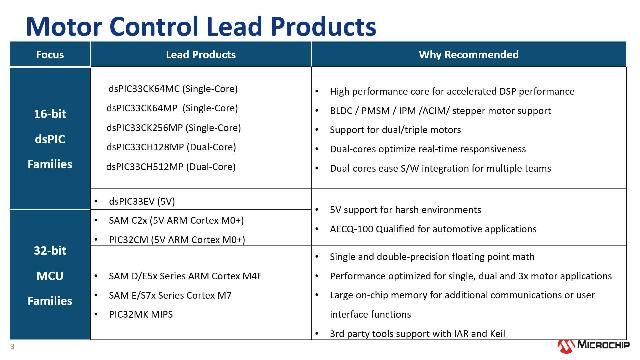
31:30Position Control of a PMSM with Simulink and Microchip 32-bit MCUs
Implement FOC algorithms for PMSM position control and deploy to ATSAME70.
 28:39
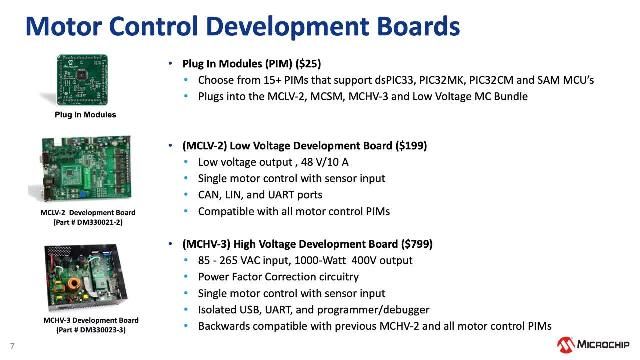
28:39Deploying Motor Control Algorithms on Microchip dsPIC, PIC32, and SAM Controllers
Generate C code from sensorless FOC algorithms in Simulink and deploy to dsPIC, PIC32, SAM.
🔬 Microchip Official Videos — 2 videos
Microchip Technology video content.
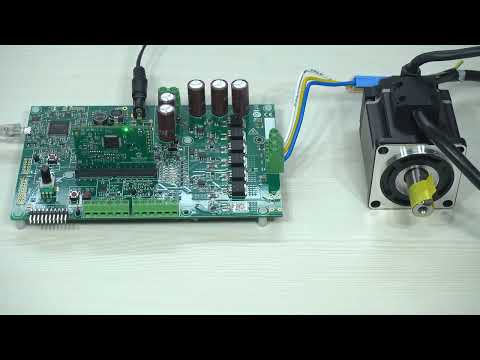
Simplify Motor Control with dsPIC33AK Devices and MathWorks' Motor Control Blockset
Measure motor parameters, tune control coefficients, and update gains live without re-flashing the dsPIC33AK.
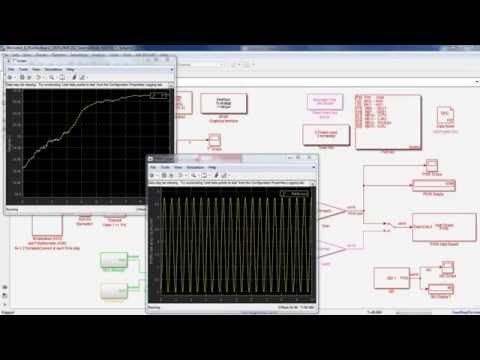 3:52
3:52Using Simulink External Mode (XCP) with Microchip dsPIC MCUs and Blocks for Simulink
Run a Simulink model in External Mode against a dsPIC target — tune parameters and stream signals over XCP while the firmware runs on hardware.
🎓 University Research (ctrl+elec project) — 6 videos
Tutorials from the ctrl+elec project at INSA Lyon’s Ampère Lab — rapid control prototyping for synchronous motors using MATLAB/Simulink + MPLAB Device Blocks for Simulink.
Authors: Romain Delpoux (INSA Lyon), Lubin Kerhuel (Microchip), Hiba Houmsi (PhD INSA Lyon 2025).
📹 See also: all demo videos →
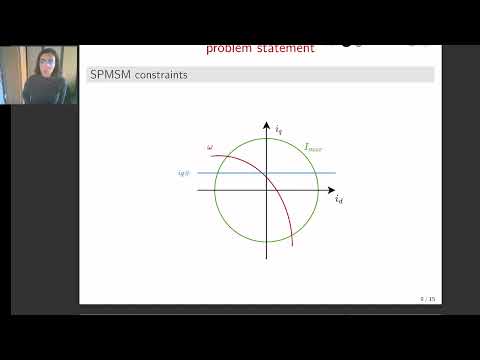 13 min
MCU — Vector Control — Field Weakening ⭐
KKT-based analytical solution for SPMSM field-weakening. Pedagogical companion to Hiba Houmsi's PhD thesis (Chapter 4).
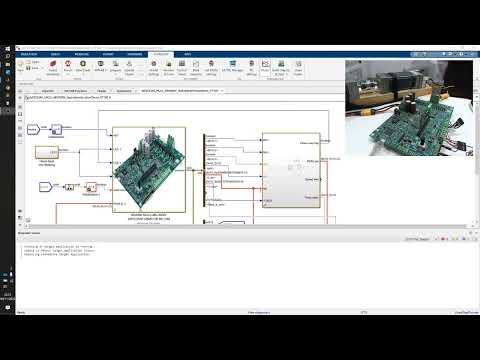 3 min
3 minMotor Parameter Estimation — Full Workflow
Simulation → code generation → on-target data visualisation.
 7 min
7 minMCU — Vector Control — Getting Started
First video of the rapid-control-prototyping series. Basic FOC implementation on a Microchip dsPIC.
 15 min
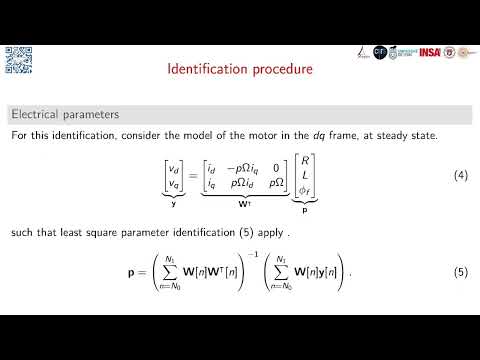
IFAC Presentation
Conference presentation on the rapid-control-prototyping platform.
 3 min
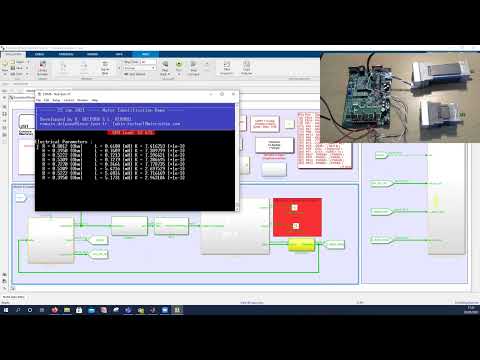
3 minSensorless Parameter Identification
Embedded sensorless parameter identification algorithm for PMSM.
 3 min
3 minSensored Parameter Identification
On-target motor parameter identification with live parameter update.
🔗 ctrl+elec Project Resources
- Website: www.ctrl-elec.fr
- GitHub: github.com/rdelpoux/ctrl-elec
- YouTube: @ctrl_elec
Credits: Romain Delpoux (INSA Lyon, Laboratoire Ampère UMR CNRS 5005), Lubin Kerhuel (Microchip Technology Inc.) & Hiba Houmsi (PhD INSA Lyon 2025).
Related Documentation
- Community & Research — All demo videos, PhD theses, lab platform
- Getting Started Guide — Learn how to use the MCHP Blockset
- Motor Control Examples — FOC algorithms and control techniques
- Examples & Tutorials — Practical examples and demonstrations
- Block Reference — Complete block catalogue and documentation
- User Guide — Code generation and deployment
- Documentation Home — Return to main documentation portal